John Collins
Director of Trading Automation, Belvedere Trading
About twenty years ago, I was sitting with Aki Chen at Dan Ryan’s Chicago Grill in Hong Kong. A flag from the University of Chicago hung on the wall above us and provided a natural spot to discuss her MBA there. She extolled the virtues of her alma mater, The University of Chicago Graduate School of Business (now the Booth School of Business). She talked about its commitment to quantitative rigor, intellectual honesty, and open inquiry with an enthusiasm that was infectious. Ten years later, I followed her path to the same school. What stayed with me from that education was not just the mathematical methods, but the deeply ingrained habit of questioning assumptions that sound obvious. It should come as no surprise, then, that she would eventually coauthor a book about exactly that.
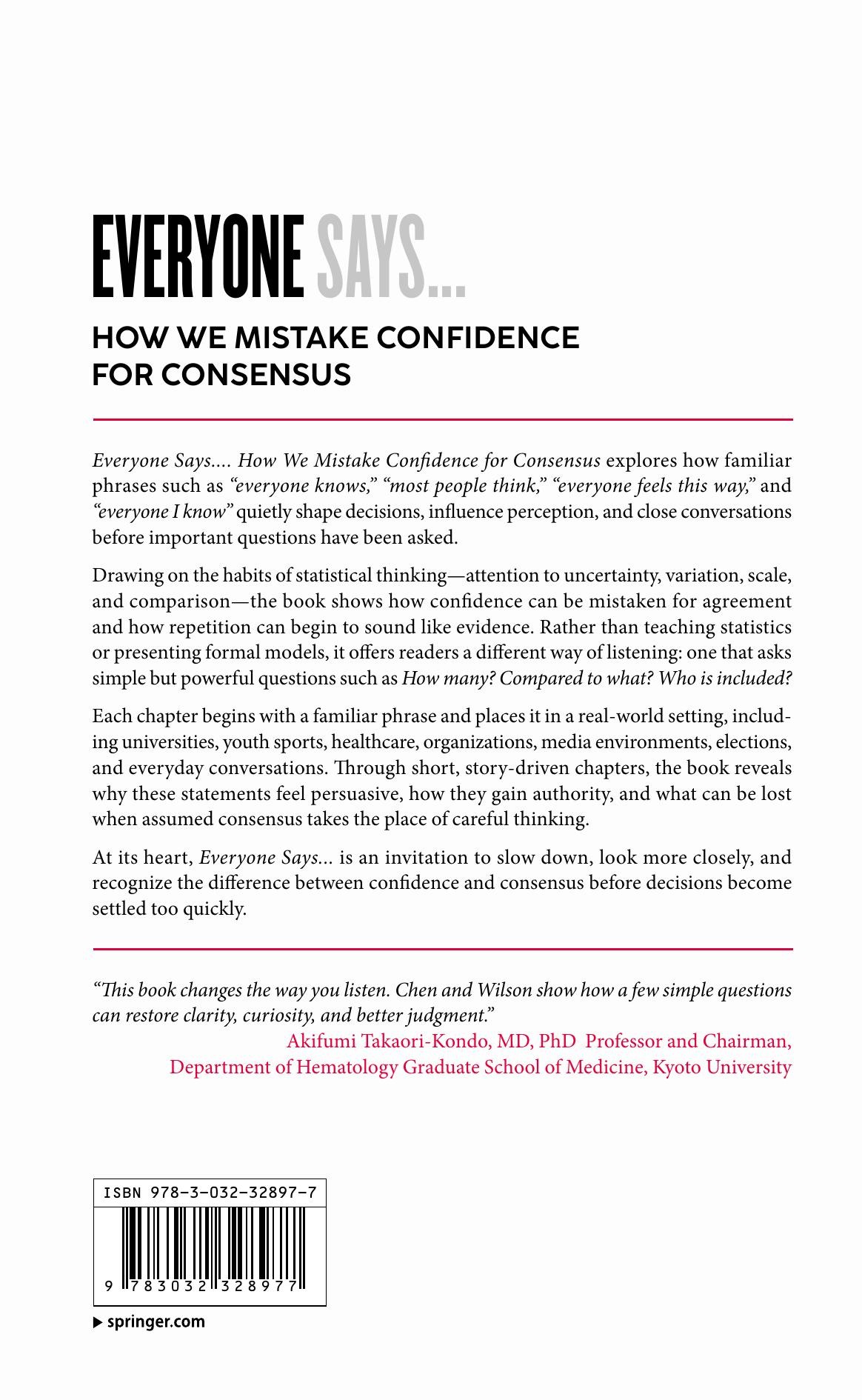
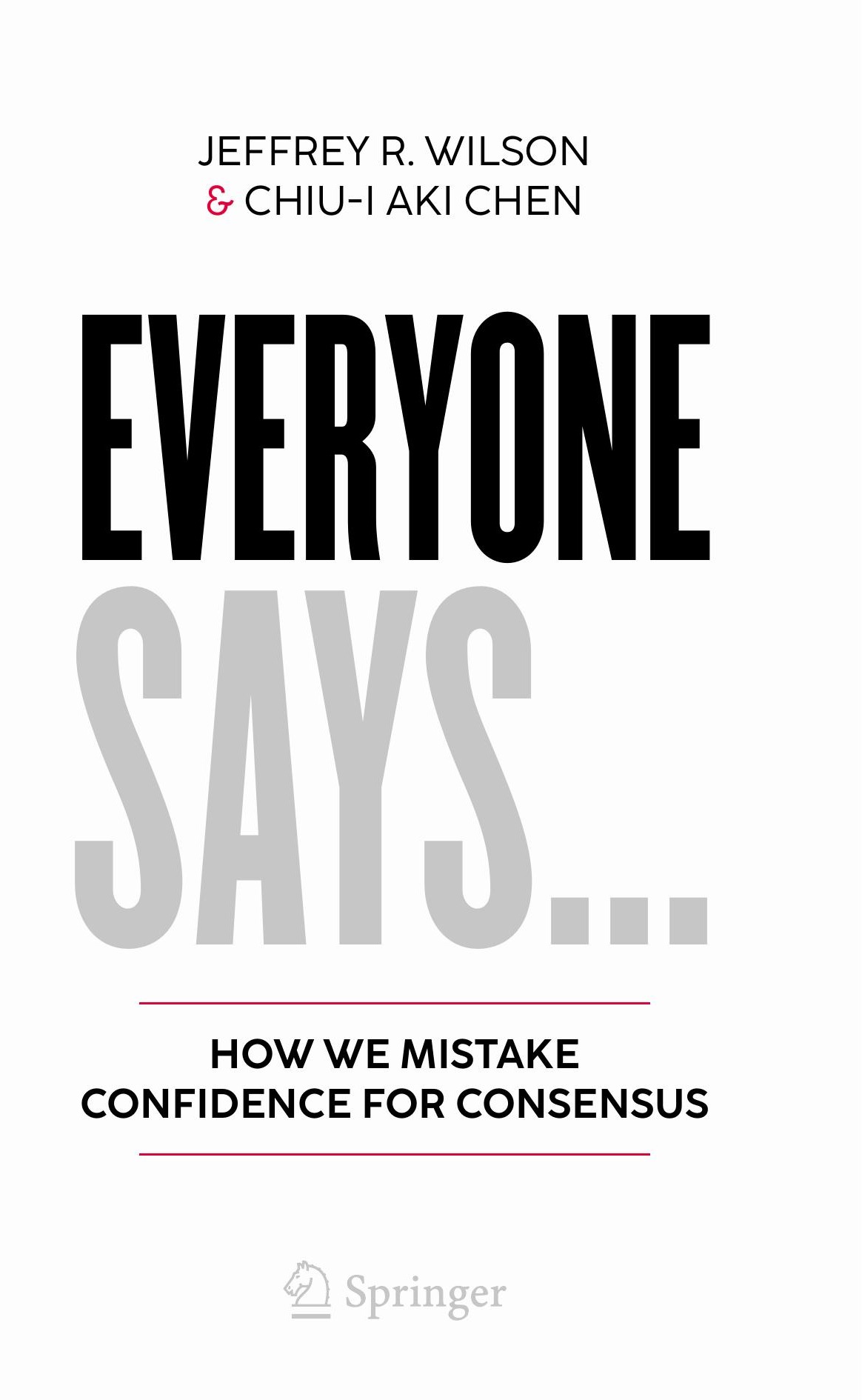
In Everyone Says, Aki Chen and statistician Jeffrey R. Wilson focus on the banal phrases used every day, such as “everyone knows,” “you can’t go wrong,” and “everyone feels this way.” These phrases may seem comforting at first glance because they imply that uncertainty has been resolved. But as Chen and Wilson show, through examples spanning professional and personal life, this reassurance is illusory. These phrases are conversation closers, stifling debate and leading to worse decision making.
Consistently making better decisions is at the core of my professional life managing derivatives traders and building automated trading systems. In trading, success depends in large part on maintaining the discipline to revisit assumptions when new evidence emerges. The most effective traders are often not those with the strongest opinions, but those willing to pause, ask better questions, and examine whether confidence is supported by data.
Everyone Says offers a blueprint of circuit breakers that reorient conversations without creating conflict. The goal is to keep conversations and thinking going long enough for real inquiry to happen. Whether you are in the boardroom, a trading floor, or the family dinner table, the ability to pause when language feels finished is one of the most underrated tools in decision making. This book is a smart, approachable guide for developing that skill.